
Reducing Dolphin Deaths from Gillnets: 3 Solutions Showing Promise
April 13, 2026
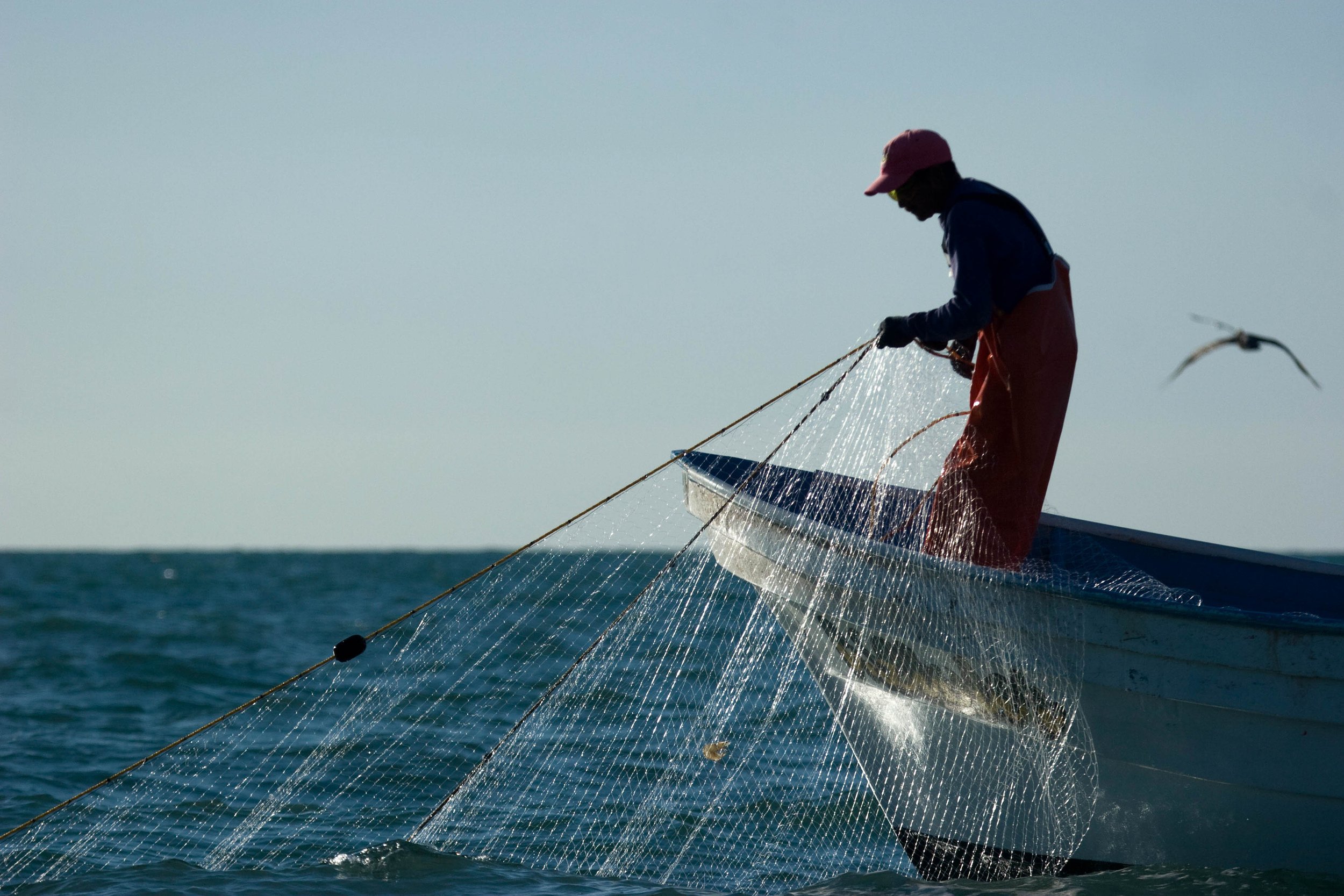
A fisher hauls in a gillnet in the upper Gulf of California, Mexico. Gillnets are the primary cause of bycatch of the Vaquita porpoise in the region. © Chris Johnson
They hang underwater like an invisible, 30-metre-high wall of mesh, catching marine animals indiscriminately as they pass. They can vary in length from 200 metres to several kilometres across the open ocean. These are “gillnets”, and they are one of the top threats to whales, dolphins, porpoises, marine turtles and sharks worldwide.
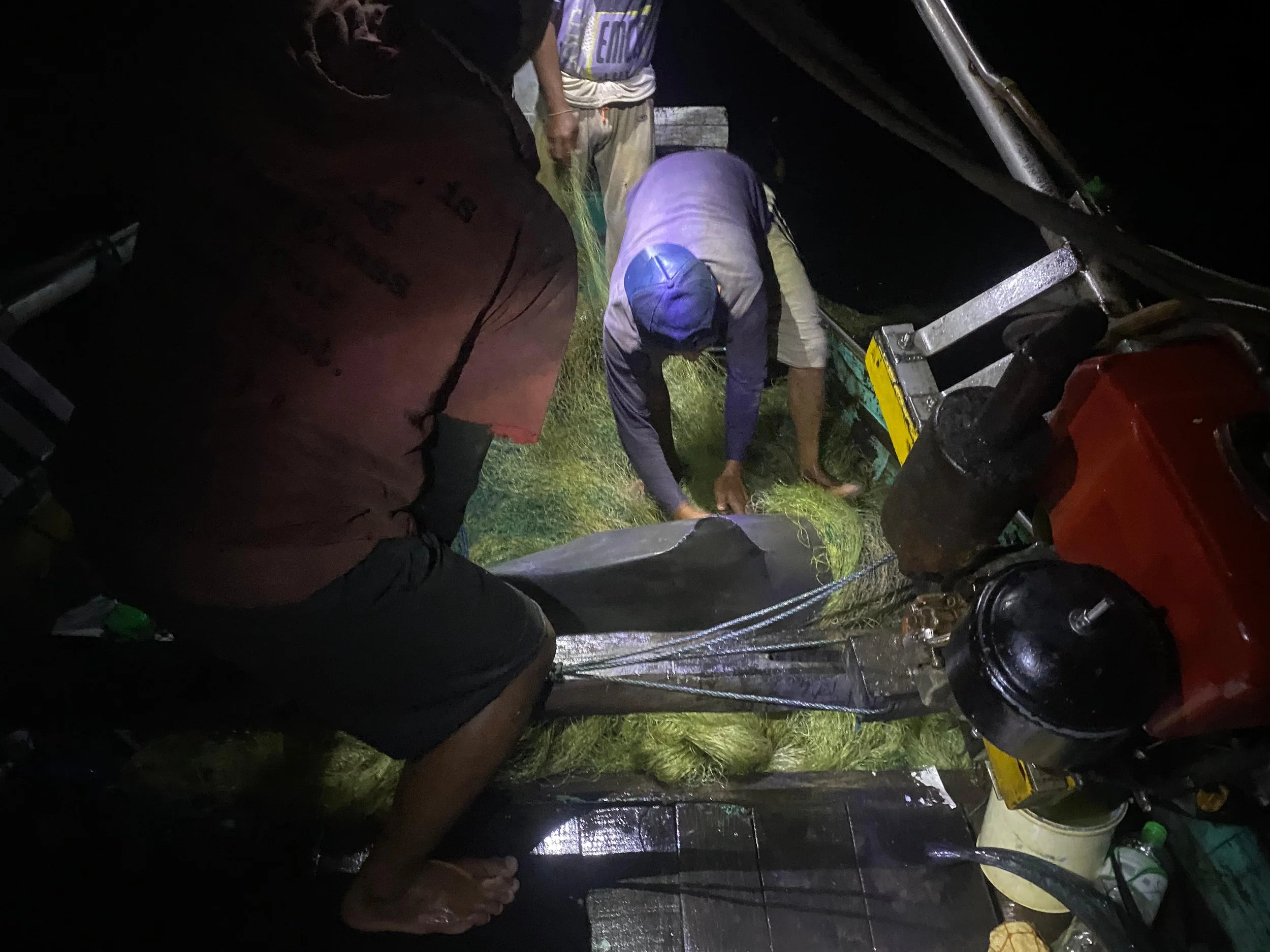
A dolphin caught as bycatch during gillnet fishing in Muncar, East Java. Sadly, the animal was already dead when it was recovered. Photo: WWF Indonesia / Chaerul Ahadi
Both industrial fisheries and local fishers use gillnets to different degrees, targeting schools of fish such as herring, mackerel and sardines. But non-target species accidentally get entangled in the net as well, called bycatch.
Between 1950 and 2018, gillnets targeting tuna killed an estimated 4 million cetaceans (whales, dolphins, porpoises) in the Indian Ocean alone. In the upper Gulf of California, Mexico, the intensive use of gillnets has decimated the vaquita porpoise, and now fewer than ten individuals remain.
Gillnets, however, are also important for livelihoods in coastal fishing communities, as they're the most affordable and effective tool to catch fish. Nevertheless, WWF-US Senior Program Officer Michael Osmond explains that fishers have important incentives to avoid bycatch.
“GIllnets are cheap and easy to use,” he says. “But when turtles and cetaceans get entangled, it becomes a problem for the fishers because they have to cut them out of the net and repair it. This can take up to a day, and they lose a lot of time fishing. Also, the quality of the catch is decreased, which means they get less money.”
WWF is working with scientists and local fishing communities, such as in Peru and Indonesia, to trial new ways to reduce bycatch by attaching objects to gillnets. The general idea is to make the gillnets visible, highlighting them on a dolphin’s underwater map as it navigates the sea.
Upcycled plastic water bottles
For years, gillnet fisheries have been encouraged to attach “pingers” to their nets, a sound device that repels marine mammals. While effective, pingers can be expensive to buy and maintain for small-scale fisheries. On the other hand, plastic bottles—the kind you buy at a corner store and throw away—are everywhere.
Scientists tied upcycled bottles to gillnets in Brazil to test whether it would help stop ensnaring bottlenose dolphins and threatened Franciscana dolphins. Early results suggest this reduced bycatch by 85%.
Dolphins use echolocation to navigate and communicate. Dolphins can’t detect the nets, but when their sound waves collide with a bottle filled with air, it feeds information back, telling them they're swimming towards a barrier.
Piero Uceda, a marine biologist at WWF-Peru, is trialing this strategy with local fishers. In Peru, bycatch kills an estimated 20,000 cetaceans each year, with the Burmeister Porpoise and Dusky Dolphin most affected. He says the bottles are spaced about 50-metres apart, with nothing but a little sand at the bottom to keep them upright beneath the surface.
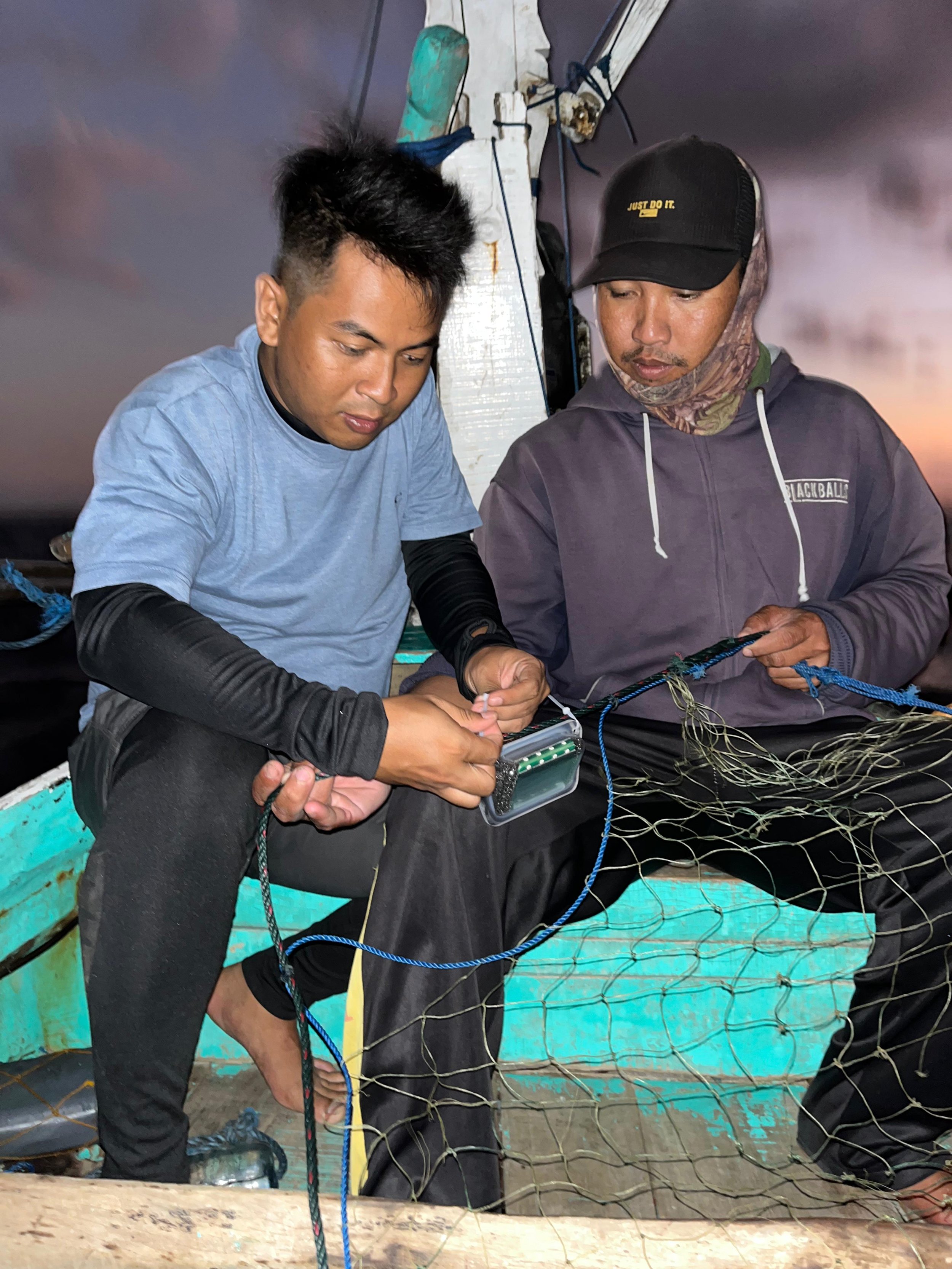
Solar-powered LED lights installed on gillnets in Muncar, East Java, as a strategy to mitigate dolphin bycatch. Photo: WWF Indonesia / Muhammad Wiralaga Dwi Gustianto
“There are really big offshore gillnets, like three-kilometres long, and the fishers leave the gillnets for about 10 hours at a time,” he says. “We started testing plastic bottles in offshore gillnets, and while we don’t have results yet, the good thing is that fishers accept being part of the project. The experimental design has been really participatory.”
Solar LED lights
The idea of attaching battery-powered LED lights to gillnets has been around since 2011, when a US team received a prize in WWF’s International Smart Gear Competition, which encouraged competitors to design innovative fishing gear for reducing bycatch. The team showed different coloured lights on gillnets attracted target fish, yet deterred sea turtles.
Since then, their work has been finessed and expanded, with researchers finding that sharks, rays and seabirds also tend to dodge the lights. Research in 2022 showed the glowing gillnets reduced sea turtle bycatch overall by 63%, and 95% for some species of sharks and rays.
But the extent the lights help stop cetaceans getting entangled is not yet clear. It looks promising so far—a paper in 2020 found they reduced dolphin bycatch in a small-scale Peruvian fishery by almost 71%.
One challenge is that the batteries must frequently be replaced, generating waste and extra costs for local fishers. In response, researchers are designing solar powered versions that soak up sunshine to recharge, addressing the issue of battery disposal and potential marine pollution.
WWF-Indonesia marine biologist Ranny Yuneni is testing these solar-powered gillnet lights with local fishers. "Some fishers have been using the lights to avoid turtle bycatch,” she says. “But it's still under trial for cetaceans and we need more trips out.”
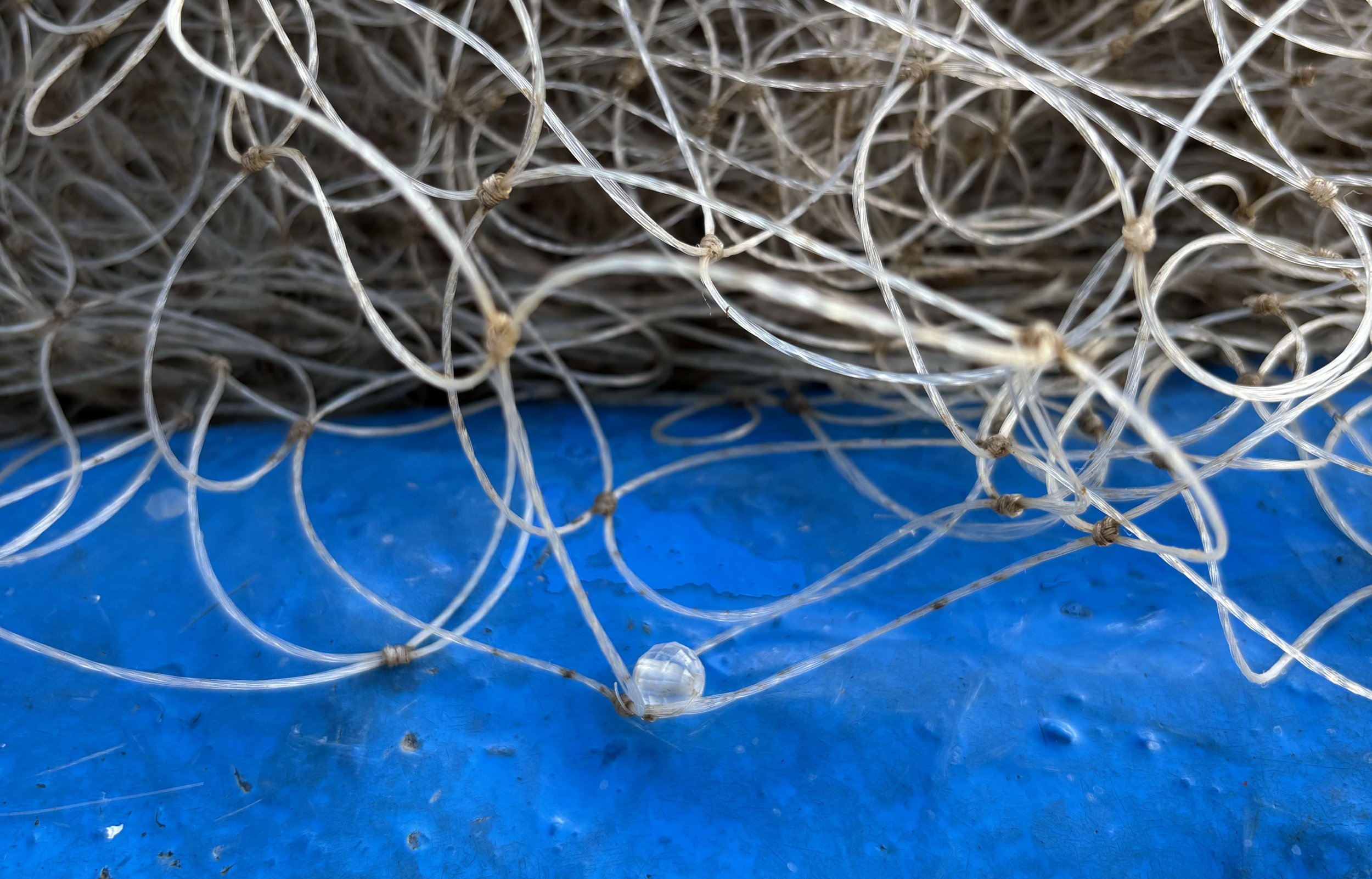
Acrylic balls on gillnets are a strategy to minimize dolphin bycatch. This method takes advantage of dolphins’ echolocation, helping the dolphins perceive the nets as barriers. Photo: WWF Indonesia / Chaerul Ahadi
Acrylic balls
Plastic spheres made of acrylic glass are incredible reflectors of sound underwater. Scientists have been working with fisheries to arrange these acrylic balls onto gillnets and test whether they reduce bycatch without affecting the amount of target fish they’re catching. The idea came from another WWF smart gear competition, based in Indonesia.
The acrylic balls are small, they bounce back sound from all directions, and they neither sink nor float but remain suspended underwater. For dolphins and porpoises, they could be an excellent warning system: a dolphin may detect the highly reflective balls with its echolocation and avoid the net.
Researchers in 2024 tested whether gillnets fitted with acrylic balls affected how much Atlantic cod fishers off the Western Baltic Sea were catching. They found no significant difference in target catch between gillnets with acrylic balls and gillnets without. This is an essential factor if we want fishers to adopt this measure. Ranny is working with scientists and fishers in the Bali Strait, Indonesia to test the acrylic balls.
“Most fishers are curious about them,” she says. "We are bringing them solutions for broken nets. There are champions we collaborate with, and we have good relationships with captains to do trials in the near future.”
A global opportunity
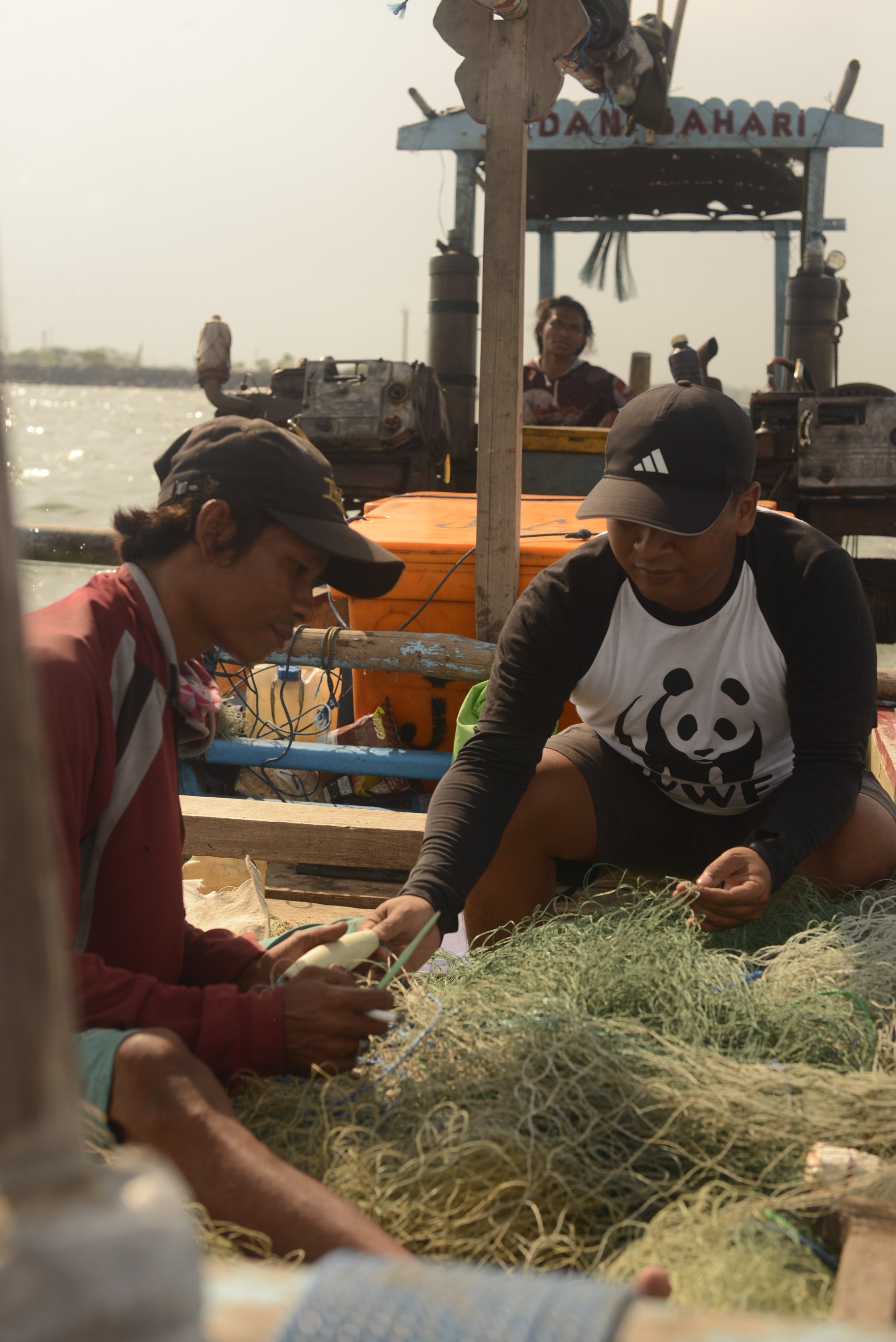
The preparation, inspection and repair of gillnets in Muncar, East Java. This is usually carried out while fishers are en route to the fishing grounds. Photo: WWF Indonesia / Wiliyan Fitranto Ardi
Tackling the threat of bycatch requires a coordinated global approach between governments and fisheries. In some regions that means banning gillnets entirely. For example, commercial gillnets are being phased out in Australia's Great Barrier Reef and in California, US.
In some coastal fishing communities, making gillnets less deadly is a more feasible approach. These three case studies of emerging mitigation measures are shaping up to be a significant lifeline for local wildlife in bycatch hotspots of Peru and Indonesia.
Michael Osmond says WWF is currently focusing on these two countries because Indonesia has one of the world’s largest gillnet fishing fleets, and Peru has one of the world’s highest rates of cetacean bycatch.
“Bycatch mitigation in gillnets is something people have been working on for ages,” he says. “We’re able to use the power of our network around the globe to look for innovative ideas.”