

BlueCorridors.org Wins 2026 Webby Award, Spotlighting Whale Conservation and Solutions
April 22, 2026
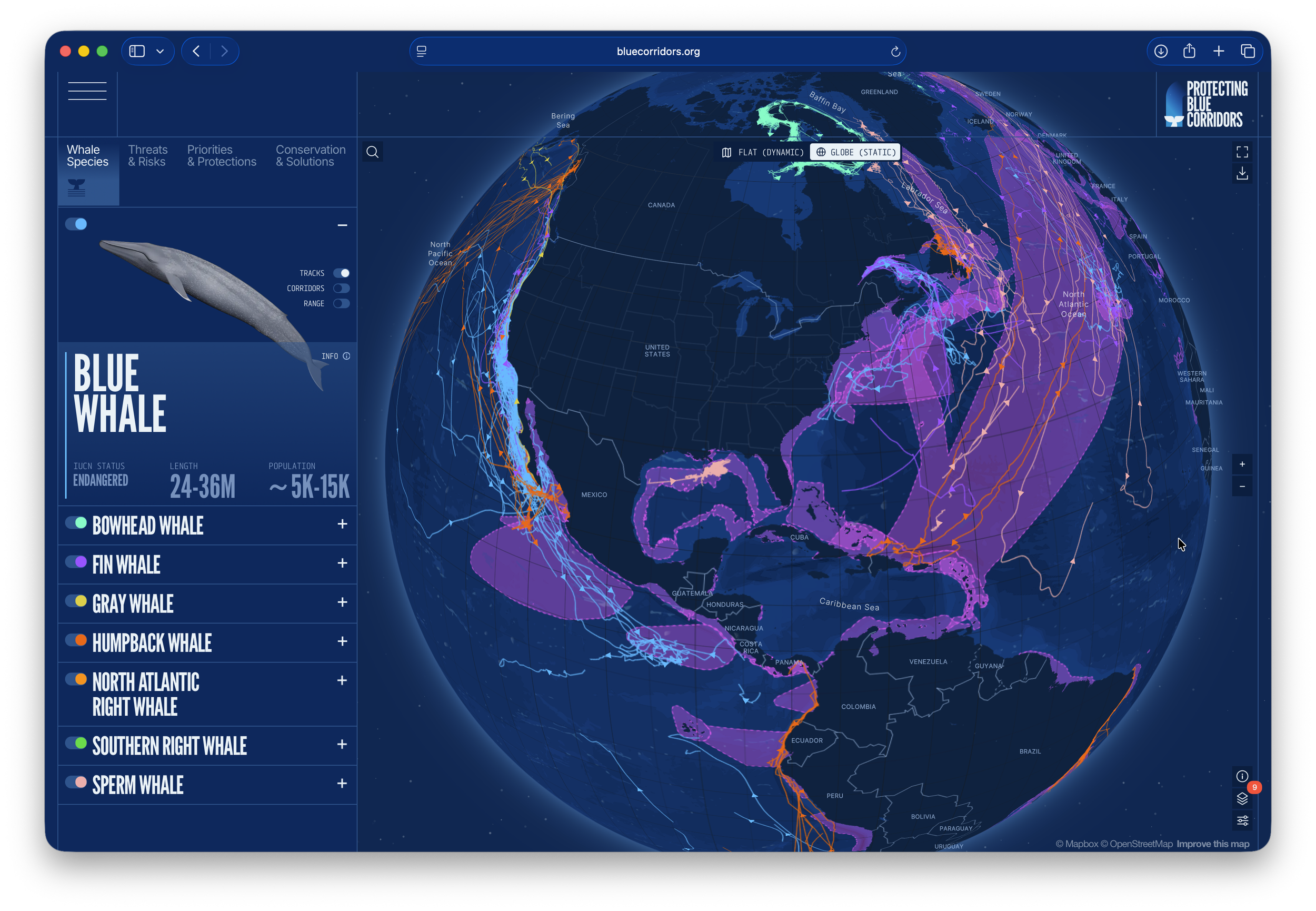
Interactive mapping tool from BlueCorridors.org. It will expand later in 2026 to include more species, movement data, and other visualizations.
BlueCorridors.org has won a 2026 Webby Award in the Best Data Visualization category, recognising a global collaboration in bringing whale migration, growing ocean risks and conservation solutions to life online.
Hailed as the “Internet’s highest honor” by The New York Times, The Webby Awards, presented by the International Academy of Digital Arts and Sciences (IADAS), are the leading international awards organisation honouring excellence on the internet.
Launched by WWF and a global coalition of scientists, research groups, NGOs, governments and tech innovators at the UN Ocean Conference in June 2025, the Blue Corridors initiative brings together three decades of whale tracking data with information on overlapping marine threats and conservation solutions. From the beginning, the aim was simple but ambitious: to make whale migration routes and critical habitats visible and publicly accessible in ways that support science, policy and ocean conservation around the world.
Blue Corridors are the ocean pathways that marine megafauna such as whales rely on to move between breeding grounds, feeding areas and other critical habitats with some spanning entire ocean basins. These routes are essential not only for whales, but also for the health of marine ecosystems.
By combining whale movement data with layers such as shipping routes, fishing effort and climate-related pressures, BlueCorridors.org helps reveal both the scale of these migrations and the growing risks whales face in a rapidly changing ocean. Its purpose is to help guide ocean protection efforts across borders and disciplines, while supporting international goals such as protecting 30 per cent of the ocean by 2030 and advancing more connected marine conservation across national and international waters.
Dr Ryan Reisinger of the University of Southampton and project co-lead said:
“We’re incredibly grateful to our technology partners at Ode, whose vision, creativity, and expertise helped us bring these complex tracking data to life in such an engaging and accessible way. This recognition also belongs to the global Blue Corridors community, who have contributed their data, expertise, and time to this initiative.
Whale migrations occur across ocean, but they are increasingly under threat from human activities. By making these ‘superhighways’ visible, we hope this platform helps catalyse meaningful conservation action, from local management to international policy, ensuring these migrations and the ecosystems they support are protected for generations to come.”
Collaboration sits at the heart of the Blue Corridors Initiative. The platform builds on contributions from more than 60 research groups around the world. It is a powerful example of what can happen when science, policy, communication and technology come together around a shared goal.
Chris Johnson, Global Lead for WWF Whale and Dolphin Conservation and project co-lead said:
“Ocean conservation is about collaboration. This is a fantastic recognition of what can happen when world-class science is made accessible to the people and institutions that can act on it. Our aim is to use new data and powerful visualisation to drive more connected, effective action for whales and help achieve global biodiversity and ocean goals by 2030.
At its heart, this work is about making the invisible visible and building stronger momentum to protect the key ocean areas that whales, and all of us, depend on.”
For more information visit:
About the Blue Corridors Initiative:
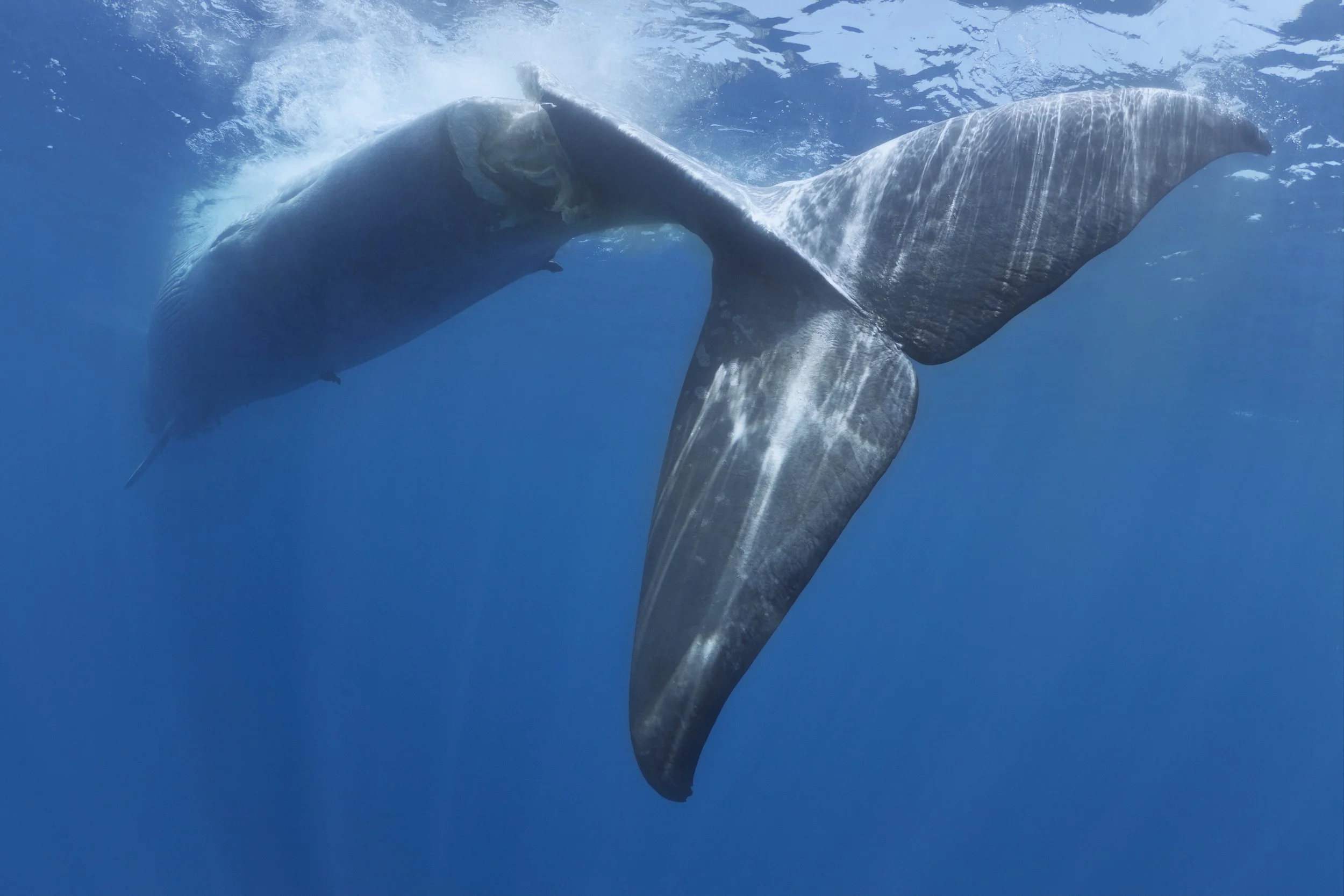
Shipstrikes pose a growing risk to whales, and we are developing new visualisations in 2026 to help mitigate them. © NaturePL.com/Tony Wu
We are a collaborative initiative across the marine mammal science and conservation communities to visualize growing risks to whales and marine connectivity conservation solutions to inform policy. We have a growing number of collaborators worldwide that includes a core governance team of world-leading science and conservation organizations oversees the Initiative, data sharing, transparency, and the BlueCorridors.org platform growth. They include: Dr Rochelle Constantine (University of Auckland, New Zealand), Dr Violaine Dulau (Globice, Reunion Island), Dr Ari Friedlaender (University of California, Santa Cruz, USA), Chris Johnson (WWF), Dr Daniel Palacios (Oregon State University / Center for Coastal Studies, USA), Dr Simone Panigada (Tethys Research Institute, Italy), Dr Rui Prieto (University of Azores), Dr Ryan Reisinger (University of Southampton, UK), Dr Els Vermeulen (University of Pretoria, South Africa), Dr Alex Zerbini (University of Washington, USA).
Technology Partner - Ode:
Ode are a group of scientists, strategists, designers, and engineers. With decades of experience at organizations such as NASA, the White House, and Google X, Ode’s team members bring deep experience in data and design as well as expertise in various climate sectors, from food and agriculture to earth observation. https://ode.partners/en