
International commercial whaling ban at 40: There’s progress worth celebrating, but more work lies ahead
Feb 14, 2026
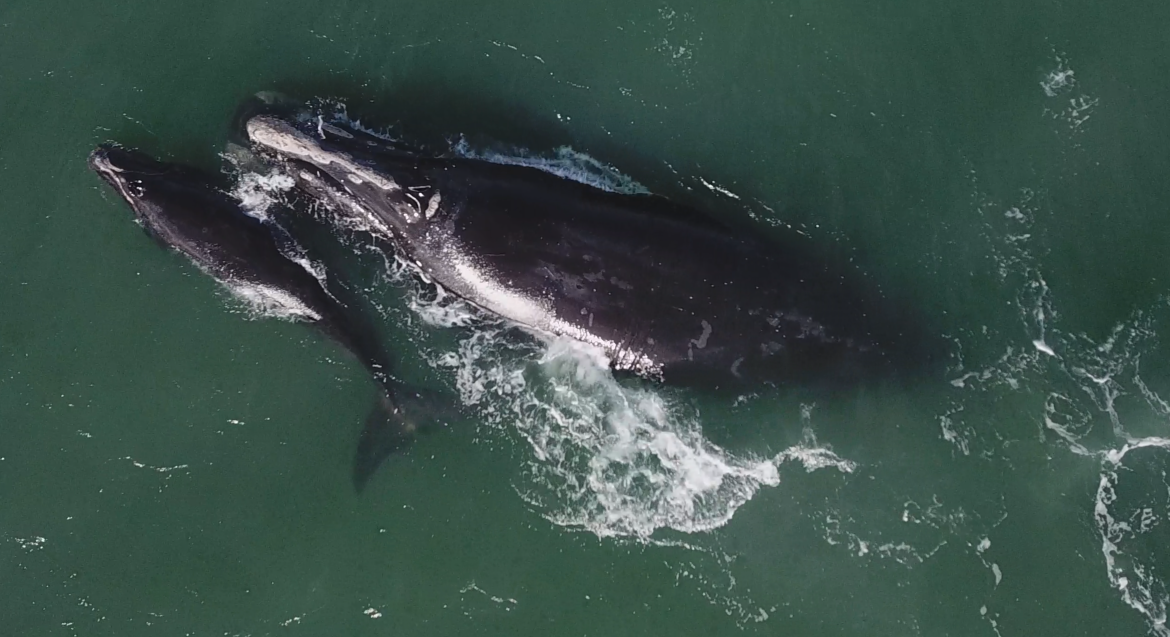
North Atlantic right whale #1245 (Slalom) and her seventh calf, on January 24, 2026. Credit: Marineland Right Whale Project/Zoe Rauscher, taken under NOAA permit #26562.
For one of the world’s most endangered whales, this calving season has been unexpectedly fruitful. Researchers have spotted 22 North Atlantic right whale calves off the southeastern coast of the United States so far, marking a hopeful, but still very slow, upward trend for the imperiled species. Fewer than 400 North Atlantic right whales are estimated to remain, up from 358 in 2020.
Like other great whales, North Atlantic right whales have a long history of exploitation. Whalers hunted the 16-metre-long species to the edge of extinction, harvesting their tissues for lighting oil, soap, margarine and more.
Back then, commercial whaling was the greatest immediate threat to whales. An estimated 3 million were slaughtered in less than 200 years – that’s around three in every four great whales across the planet.
This year marks 40 years since the world united to enforce a global moratorium on commercial whaling and give giants like North Atlantic right whales a chance to recover. The International Whaling Commission’s moratorium came into force in 1986 – though whaling was banned sooner for some species.
So far, the recovery has been mixed.
Humpback whales have shown the biggest comeback. The population in Eastern Australia, for example, is estimated at 50,000 individuals, up from just over 100 in 1963 when humpback hunting was banned.
But for others, like the North Atlantic right whale, recovery has been hampered by other worsening threats, such as entanglement in fishing gear, collisions with ships and climate change. In fact, seven out of the 14 great whale species are classified as endangered or vulnerable by the International Union for Conservation of Nature (IUCN).
So, as the commercial whaling moratorium enters its fifth decade, let's take stock of what we’ve learned since then – and the work that still lies before us.
Whale waste is rich in nutrients for ocean health
Whales are keystone species and can influence the health of marine ecosystems. One important way they do this is through their waste.
Whale poop and urine are packed with essential elements such as nitrogen, phosphorus and iron. This fertilizes the ocean, which fuels the growth of phytoplankton – microscopic plants that produce half the Earth's oxygen and absorbs up to 60% of carbon dioxide from the air.
A growing body of research is revealing just how much these bursts of nutrients help the planet.
For example, research last year investigated the urine of gray, humpback and right whales. It found that these baleen whales transport almost 4,000-tons of nitrogen as they migrate from their feeding to breeding areas each year. By fertilizing phytoplankton, this nutrient flow has the potential to capture 18,180-tons of carbon dioxide.
The researchers note, however, that this volume of nutrients might have been three times higher before commercial whaling decimated baleen whale populations.
Chris Johnson is the Global Lead of WWF’s Protecting Whales and Dolphins Initiative. He says the massive loss of whales in places like the Southern Ocean disrupted food webs and weakened ocean productivity.
“The ocean is still feeling these impacts today. Growing evidence shows restoring whale populations is critical to rebuilding healthy, resilient marine ecosystems."
Commercial whaling isn't over everywhere
It has been illegal for members of the International Whaling Commission (IWC) to hunt whales for commercial purposes since the moratorium came into effect in 1986. But there have been some exceptions: Japan, Norway and Iceland have carried on killing whales for commercial purposes.
Norway and Iceland are part of the IWC and hunt whales commercially within their national waters, under formal objection or reservation to the moratorium. Norway targets minke whales, while Iceland targets both minke and fin whales – the second largest animal on Earth.
Until 2018, Japan continued what it called “scientific whaling” in the Antarctic. But this was, in fact, commercial whaling in all but name.
Japan left the IWC in 2019 and continues to hunt minke, Bryde’s, sperm and fin whales within their Exclusive Economic Zone. The good news is that demand for whale meat within Japan is dwindling. Japan’s consumption of whale meat peaked in 1962 at 226,000 tons. By 2017, it was just 3,000 tons.
“Commercial whaling undermines global efforts to recover whale populations that are still rebuilding from past exploitation,” Chris says.
“Whales migrate across entire ocean basins, often moving through the waters of multiple countries, making their protection a shared international responsibility.”
There’s more trouble for whales ahead
Commercial whaling may be banned almost everywhere, but other challenges are getting worse. The cumulative impact of threats from human activity is not only preventing whale populations from recovering, but also impacting their health. Scientists are documenting some populations shrinking in size.
For example, 2023 research shows southern right whales visiting South African waters to breed are 23% lighter than their ancestors in the 1980s. They’re also having fewer calves. Their stunted size suggests that stress is causing whales to suffer intergenerational damage. It also reflects the decaying health of the marine ecosystem more broadly.
Southern right whales feed primarily on krill in Antarctic waters thousands of kilometres away. They must build enough blubber as fuel for their massive migrations to the warmer South African waters, and to care for their calves. But the deteriorating ecosystem from human activity means their food has become scarcer.
Whales in other parts of the world are shrinking, too. Research in 2024 found the size of gray whales in the Pacific has shrunk by 13% since 2000. North Atlantic right whales have also become shorter and less bulky.
“Human impacts on our oceans are growing,” Chris says. “Ship strikes from increasing vessel traffic, bycatch by fisheries, underwater noise, plastic and chemical pollution, and climate change are overlapping more than ever across the critical habitats and migratory corridors of whales.”
Bycatch, for example, kills an estimated 300,000 whales, dolphins and porpoises each year, worldwide.
Shipping traffic, another major threat, is expected to rise by up to 1,209% by 2050. This risks more deadly collisions and fills the water with a cacophony of noise that disrupts a whale’s ability to communicate and navigate.
Meanwhile, worsening climate change and pollution – including underwater noise, chemical and plastic pollution – is making it harder for whales to find food and making them more vulnerable to disease.
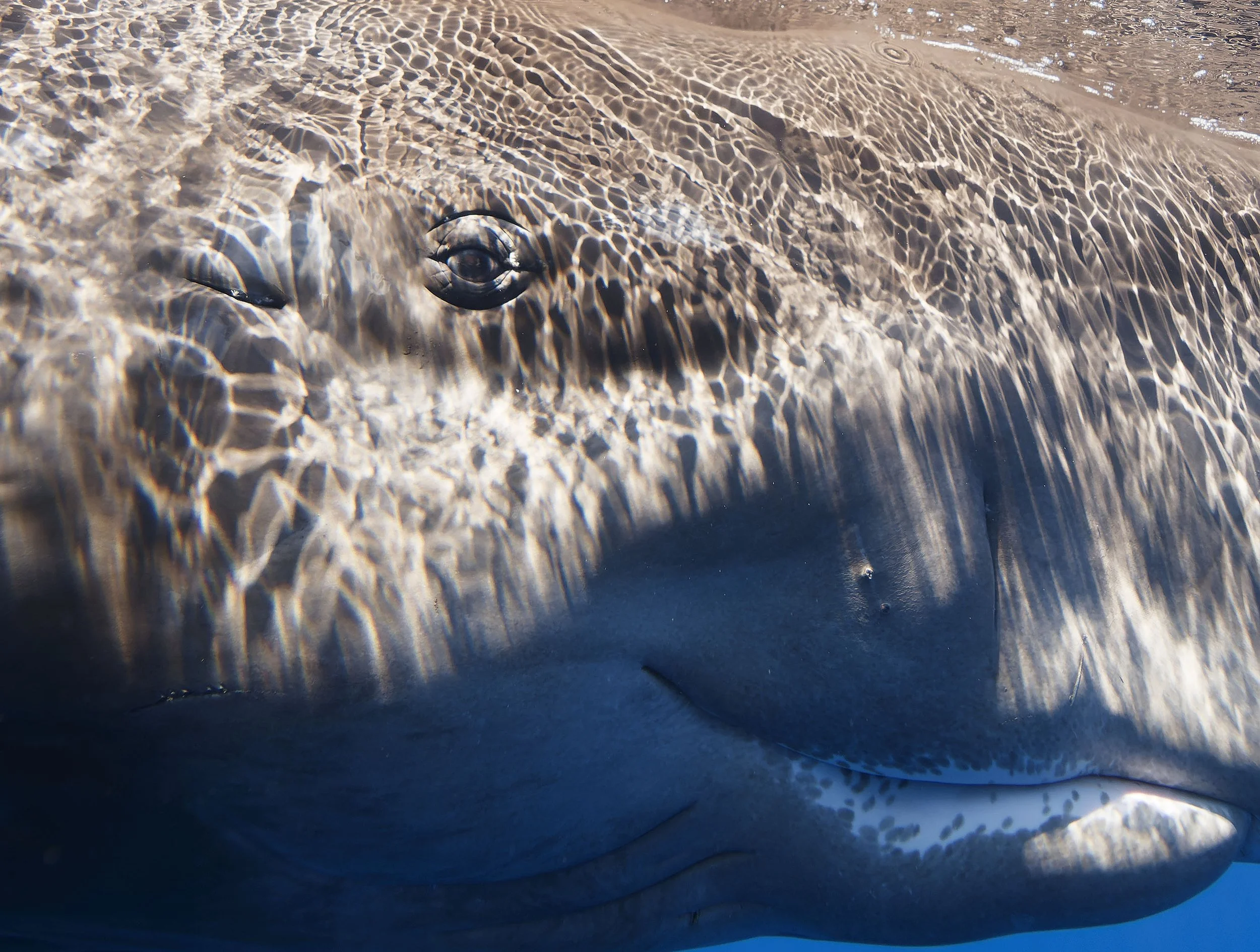
A sperm whale calf © Judith van de Griendt / WWF
The IWC remain active and critical
As the global body for whale conservation, the IWC has 88 member nations. This year, it’s celebrating its 80th birthday, reminding us that long-term, global cooperation on nature isn’t just essential, but achievable.
As the threats to whales have evolved, so has the IWC. Its remit has expanded beyond regulation of whaling to provide solutions for increasing bycatch and entanglement, ship strikes, underwater pollution and debris, and sustainable whale watching.
One example of its varied work was to launch the Global Whale Entanglement Response Network (GWERN) in 2011. Untangling a whale from a fishing net is a complicated and extremely dangerous job. GWERN builds a worldwide network of trained responders to take on the challenge, saving whales one entanglement at a time.
“The IWC plays a critical role in bringing governments and scientists together, sharing best practice and building the evidence base needed to act, through its Scientific Committee and Conservation Committee. This convenes some of the world’s leading experts,” Chris says.
“Ultimately, however, implementation sits with governments. Real mitigation only happens when countries can translate IWC and best available scientific guidance into law, regulations, and on-the-water action.”
Effective whale conservation is a team effort
For most countries, commercial whaling may feel like a distant memory. But it's crucial that the moratorium isn’t taken for granted. Nations that are vocal supporters of the moratorium must also look at their role in contributing to other threats.
But, as Chris explains, there is a significant opportunity right now to coordinate action and collaborate creatively across national and international waters. This will accelerate the recovery of whales and “help whales thrive at the scale they live”.
The moratorium on whaling 40 years ago set an important precedent, illuminating the potential for nations to come together and protect nature. The UN High Seas Treaty, which came into force in January 2026, brings us renewed hope by providing the foundations to protect marine life like whales in areas beyond national borders.
Every success, from the astonishing recovery of humpback whales to the recent encouraging uptick of North Atlantic right whales, inches us closer to restoring the health of our imbalanced ocean.