

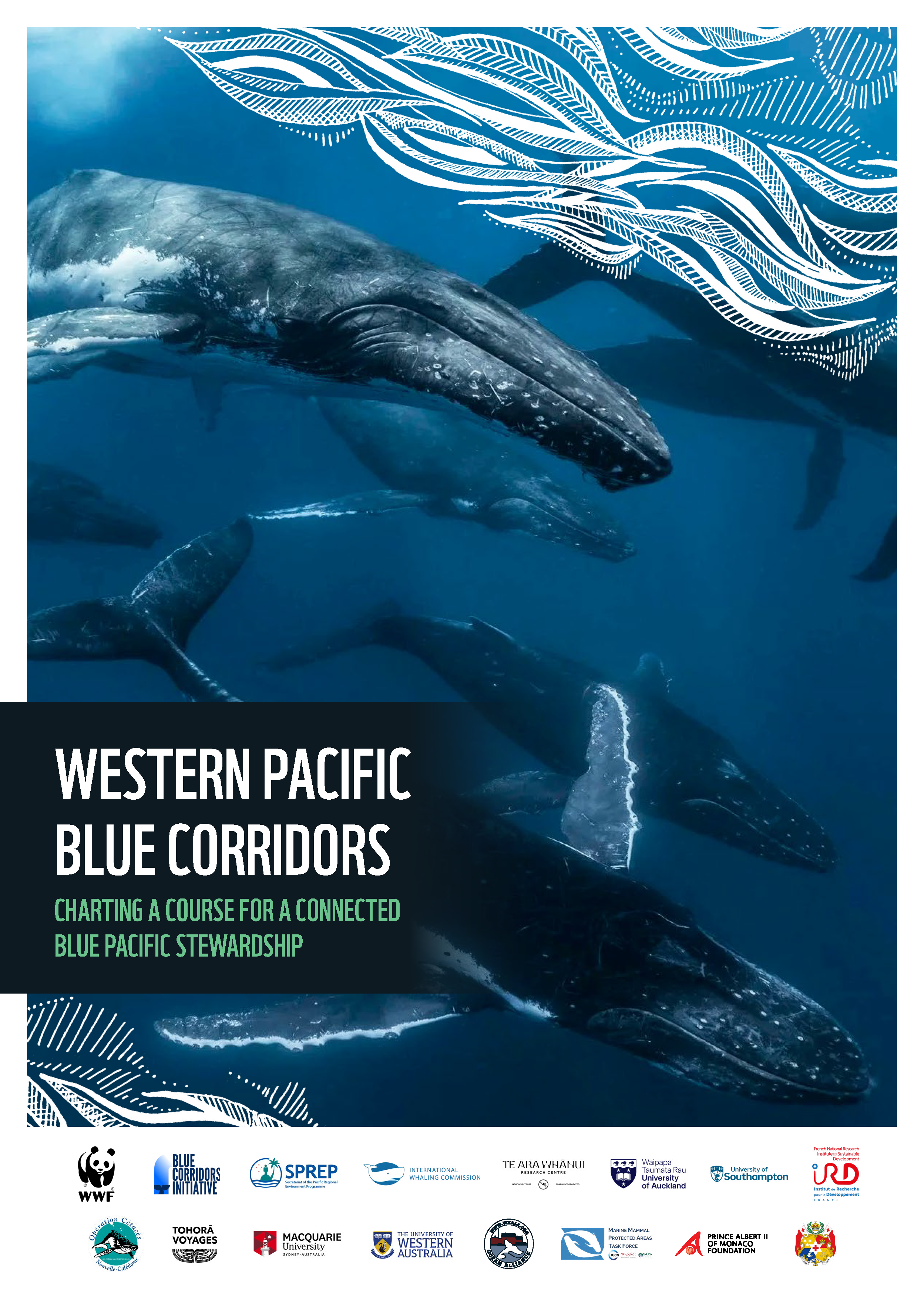
Western Pacific Blue Corridors (2026)
Charting a Course for a Connected Blue Pacific Stewardship
A new collaborative report sets out a positive, practical course to safeguard the ocean pathways that connect whales, dolphins and other migratory marine life with Pacific peoples, cultures and economies.
Blue corridors are migratory pathways used by marine megafauna such as whales, dolphins, sharks, turtles, tuna and rays. They connect the critical habitats these species depend on to feed, breed, rest and socialise as they move across the ocean. Growing evidence shows that whales transport nutrients, support productive ecosystems and link habitats across vast distances. Across the Pacific, these journeys also carry knowledge, kinship and identity, along with responsibilities of stewardship passed through generations.
Western Pacific Blue Corridors: Charting a course for a connected Blue Pacific Stewardship is being released ahead of the 55th Pacific Islands Forum Leaders Meeting in Palau. It highlights the enhanced cooperation needed among local communities, regional organisations, researchers, industry and governments to protect whales and dolphins across borders and sectors.
This report marks an important next step. Drawing initially on the region's extensive whale research and local knowledge, it brings together satellite tracking, photo-identification and other evidence to examine blue corridors and conservation opportunities across Tonga, the Cook Islands, Fiji, New Caledonia, Vanuatu, Papua New Guinea, Aotearoa New Zealand and eastern Australia. It also points towards future work on marine turtles and other migratory species.